
From Field to Formula: The Story of Hops in Your Beard Care
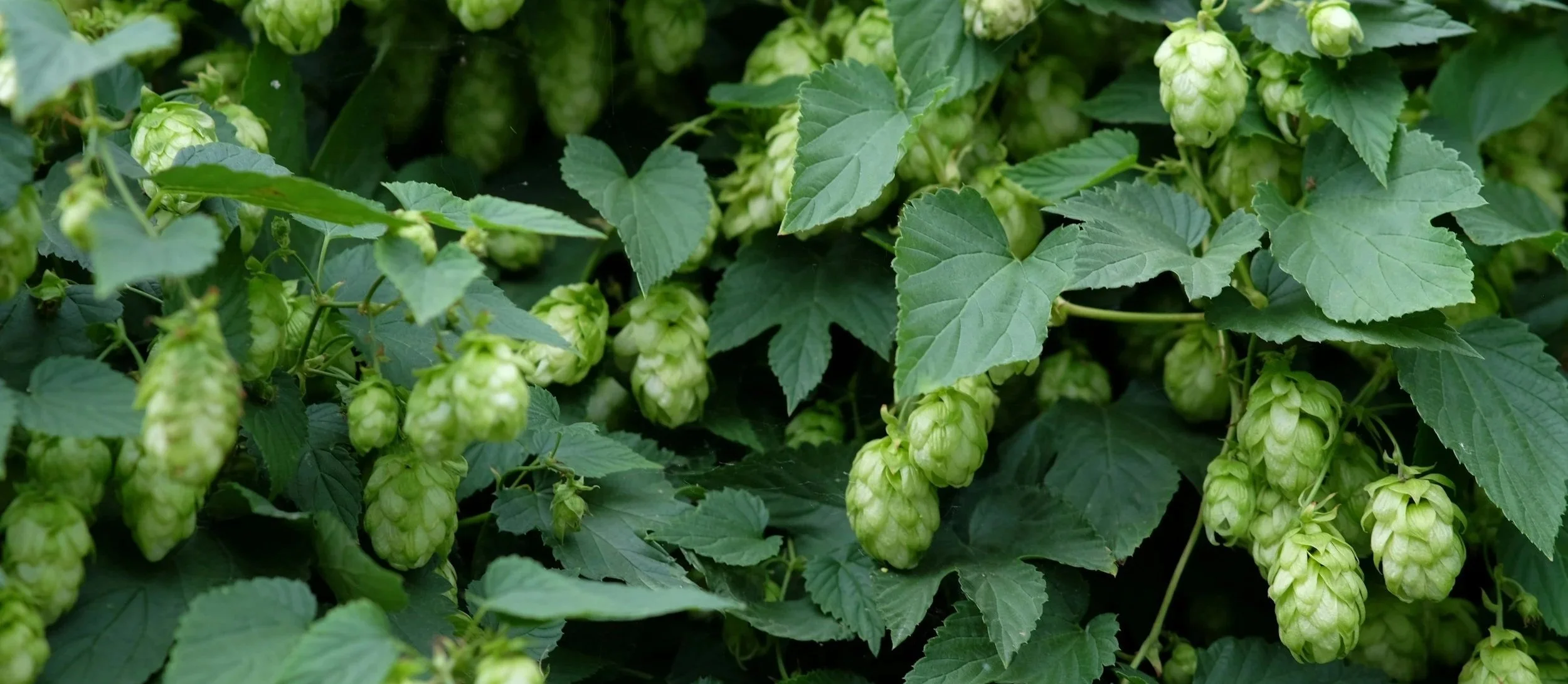
Late summer. The hop bines climb their trellises, heavy with papery green cones that smell of earth and something almost resinous — bitter, bright, alive. Most people see hops and think brewery. They imagine pint glasses and craft beer flights, the bitter backbone of an IPA.
But long before the first pint was poured, hops were healers.
Herbal pillows for restless sleepers. Poultices for irritated skin. Folk remedies passed down through generations of European herbalists. The monks who cultivated hop gardens for their breweries noticed something unexpected: their hands stayed soft. Their skin stayed calm. The plant was doing more than flavoring their ale.
Somewhere in that history, a spark caught. A connection between this climbing bine and the skin it touched.
We followed that spark.
A Plant With History
Hops — Humulus lupulus — are climbers, though technically they're bines, not vines. The distinction matters to botanists: vines climb with tendrils, bines climb by wrapping their stems around whatever's nearby. Hops spiral clockwise, always clockwise, reaching toward the sun with a determination that borders on stubborn.
The cones — those papery, pinecone-shaped flowers — contain the magic. Inside each one sits lupulin, a sticky yellow resin packed with compounds that humans have been using for centuries.
The ancient Egyptians used hops. So did the Romans. Medieval monks cultivated vast hop gardens, ostensibly for brewing, but their herbalist brothers kept detailed notes on other applications. Sleep tonics. Skin salves. Remedies for restlessness and inflammation.
By the 1800s, hop pillows were a common prescription for insomnia. Workers in hop fields reported unusually soft hands and calm skin despite long days of manual labor. The plant was telling us something. We just weren't always listening.
What Science Tells Us Now
Modern research has caught up to what those monks and field workers knew intuitively. Hops contain a remarkable array of compounds that benefit both skin and hair.
The Lupulin Factor
That yellow resin inside each hop cone — lupulin — contains bitter acids, essential oils, and flavonoids that work together in ways we're still discovering. These compounds give hops their antibacterial, anti-inflammatory, and antioxidant properties.
For the Skin
The skin beneath a beard lives in a unique microclimate — warm, often humid, rarely exposed to fresh air or sunlight. It's a breeding ground for bacteria and irritation. The scalp faces similar challenges — covered by hair, prone to oil buildup, and often neglected in daily care routines.
Hops address this directly:
Antibacterial action that fights the bacteria responsible for beardruff, dandruff, and skin irritation
Anti-inflammatory properties that calm razor burn, ingrown hairs, scalp irritation, and general redness
Antioxidant protection from environmental stressors that age skin prematurely
Skin barrier support that helps maintain moisture balance in challenging conditions
Research published in dermatological and phytotherapy journals has demonstrated hops extract reducing inflammation markers and supporting the skin's natural protective functions. Studies have shown that the polyphenols and flavonoids in hops — particularly xanthohumol — exhibit significant antioxidant and anti-inflammatory activity. This isn't folk wisdom anymore. It's documented science.
For the Hair
Whether it's the beard on your face, the hair on your head, or the smooth scalp you maintain with intention — hops deliver benefits across the board:
Strengthening properties from naturally occurring silica and amino acids that reduce breakage and improve resilience
Smoothing effects that reduce frizz, flyaways, and that unruly texture that makes styling difficult
Scalp-soothing benefits that create the healthy foundation for optimal hair growth
Natural shine without synthetic coatings or waxy buildup that weighs hair down
Improved manageability that makes both fine and thick hair easier to style and control
For men dealing with thinning hair, the scalp-health benefits of hops become even more important. A healthy scalp environment supports the hair follicles you have, giving them the best possible conditions to do their work.
For men with thick, coarse hair that tends toward dryness or unruliness, hops' conditioning properties help soften and smooth without the heavy residue that makes hair look greasy by midday.
The same compounds that calm irritated skin also calm irritated scalps — making hops equally valuable whether you're growing a beard, maintaining a full head of hair, or keeping your head clean-shaven.
Why Your Grooming Routine Needs This
Let's be honest about what most men's grooming products offer: a list of unpronounceable chemicals, a vaguely "masculine" scent, and a promise that rarely delivers.
The beard care industry exploded over the past decade, but most of it focused on the hair — softening it, shaping it, making it behave. The skin beneath? An afterthought.
Men's hair care hasn't fared much better. Walk down the shampoo aisle and you'll find two options: cheap 2-in-1 products that strip your hair and leave your scalp dry, or overpriced bottles with fancy marketing and the same harsh sulfates hiding behind botanical buzzwords.
And if you're a man who shaves his head? The options are even worse. Scalp care has been treated as an extension of hair care, ignoring the reality that a shaved head has entirely different needs.
Here's what we believe:
The skin is the foundation. Whether you're growing a beard, maintaining your hair, or keeping your head smooth — healthy skin is where everything starts. Neglect it, and no amount of styling product will save you. Nourish it, and everything else falls into place.
Hops give us a way to nourish that foundation — to address inflammation, bacteria, and environmental stress while supporting the hair that grows from it.
Most grooming products ask you to choose: effective or natural. Powerful or gentle.
We don't believe in "or."
From Field to our Formula
So how do you capture what hops offer and put it in a bottle?
It starts with sourcing. We use CO₂-extracted hops for potency — this method pulls the beneficial compounds without the harsh solvents that can degrade delicate plant materials. The result is a concentrated extract that carries the full spectrum of what hops have to offer.
But concentration isn't everything. We also work with whole-plant infusions, steeping hops into our signature sunflower oil base over time. This slower method captures subtler compounds that extraction might miss. It's the difference between reading the summary and reading the whole book.
Sunflower oil itself deserves a moment here. It's our foundation for a reason — rich in linoleic acid, deeply compatible with human skin, lightweight enough to absorb without greasiness. When we infuse it with hops, we're creating a carrier that doesn't just deliver the botanical benefits but amplifies them.
There's an old story about hops growing wild in scorched earth — thriving where fire had passed, as if the heat awakened something in the soil. We can't say whether that's science or legend. But we can say this: when we pair hops with warmth, with intention, with care that borders on obsessive... something works.
Every batch is made by hand. Every formula is tested on actual beards, actual scalps, actual hair, actual skin. We don't release anything until it earns its place in your routine.

The HAFO Collection
HAFO — Hop Around Find Out — is our answer to everything we've been talking about. A complete line built on the botanical power of hops, designed for men who take their grooming seriously but don't take themselves too seriously.
Four products. One philosophy. A unified scent experience that carries through your entire routine.
Hopscortch — Beard Oil
The daily foundation.
Some men think beard oil is optional. Those men have itchy, unruly beards and partners who've stopped leaning in for kisses.
Hopscortch delivers hops-infused nourishment directly to the skin beneath while softening and conditioning the hair above. It absorbs without greasiness, hydrates without heaviness, and leaves your beard feeling like it finally got its act together.
A few drops after washing. Worked through damp beard hair. That's it. Simple enough that you'll actually do it, effective enough that you'll notice when you skip it.
Hopstrike — Beard Balm
When your beard needs direction.
Oil handles nourishment. Balm handles control.
Hopstrike is for the beard that has opinions — the one that wants to curl where it shouldn't, stick out where it shouldn't, generally rebel against your intentions. This balm combines hops-powered conditioning with natural hold, taming the chaos without the crunch or residue of synthetic styling products.
Warm it between your palms. Work it through. Shape your beard into something that looks intentional rather than accidental. The hold is light to medium — enough to guide, not enough to shellac.
Scourge — Beard & Hair Shampoo
Clean that actually means clean.
Your beard is a filter. It catches lunch, dust, pollen, and the general debris of existing in the world. The hair on your head faces daily assault from sweat, environmental pollution, product buildup, and the oils your scalp produces whether you want it to or not. And if you keep your head shaved, your scalp still needs cleansing — arguably more, since there's no hair to absorb excess oil.
Scourge cuts through all of it.
This isn't the harsh, stripping "clean" that leaves your skin tight and your hair brittle. This is hops-powered cleansing that purifies without punishment. It removes what shouldn't be there while respecting what should.
For men with hair, Scourge cleanses without stripping the natural oils that keep your hair healthy and manageable. No more choosing between "clean" and "not a dried-out mess."
For beards, it reaches the skin beneath — the part most beard washes ignore entirely.
For shaved heads, it removes oil and buildup while soothing the skin that faces razors, sun, and the elements directly.
Use it on your beard. Use it on your head. Use it wherever you need a reset.
Scorchsilk — Beard & Hair Conditioner
Where intensity meets softness.
After Scourge does its work, Scorchsilk restores.
This conditioner brings hops' smoothing and strengthening properties to bear, transforming hair from something you tolerate into something you actually like.
For beard hair: Impossibly soft, easier to style, less prone to the wiry rebellion that makes beards look unkempt.
For head hair: Silky without weight, manageable without greasiness, with the kind of natural shine that looks healthy rather than product-laden. Whether your hair is thick and coarse or fine and prone to flatness, Scorchsilk conditions without compromising volume or adding heaviness.
For shaved heads: Yes, even without hair. Your scalp skin benefits from conditioning — it stays smoother, more comfortable, and better prepared for your next shave.
The name says it all: the intensity of fire, the result of silk.
Apply after washing. Let it sit for a minute or two — longer if you want deeper conditioning. Rinse. Feel the difference.
Building Your Ritual
Products are just objects until you use them with intention. Here's how the HAFO line works together:
The Daily Ritual (Bearded Men)
Morning or night, after your shower:
Hopscortch oil — a few drops, worked through damp beard
Hopstrike balm — if you need hold or have a longer beard that requires shaping
Time investment: 60 seconds. Impact: significant.
The Wash Day Ritual (Bearded Men)
Two to three times per week:
Scourge shampoo — lather, massage into beard and skin beneath, rinse
Scorchsilk conditioner — apply, wait, rinse
Hopscortch oil — while beard is still damp
Hopstrike balm — for styling and hold
The Hair Care Ritual (Men With Hair)
For the men maintaining the hair on their head:
Scourge shampoo — massage into scalp, work through hair, rinse thoroughly
Scorchsilk conditioner — apply from mid-length to ends (and to scalp if prone to dryness), wait 1-2 minutes, rinse
Style as usual — you'll notice your hair responds better, holds style longer, and looks healthier
For daily washers: You can use Scourge daily without the stripping effect of harsh shampoos. Your scalp will thank you.
For less frequent washers: Scourge handles the buildup from multiple days without over-cleansing. Use it when you need it.
For men with thinning hair: Focus Scourge on the scalp, massaging gently to promote circulation. Follow with Scorchsilk to keep existing hair strong and healthy-looking.
For men with thick or coarse hair: Let Scorchsilk sit a bit longer — three to five minutes — for deeper conditioning that tames unruliness without weighing hair down.
The Head-Shaver's Ritual
For the men who keep it smooth up top:
Scourge shampoo — cleanse your scalp, removing oil and buildup
Scorchsilk conditioner — yes, even without hair. Your scalp skin benefits from conditioning and stays smoother between shaves
Continue with your shaving routine, knowing your skin is prepped and nourished
The Bearded Man With Hair
For men rocking both a beard and hair on their head:
Scourge for scalp, hair, and beard — one product, full coverage
Scorchsilk for hair and beard — condition everything at once
Hopscortch for beard
Hopstrike for beard styling
The Full Package
For men with a beard who also shave their heads:
Scourge for scalp and beard
Scorchsilk for scalp and beard
Hopscortch for beard
Hopstrike for beard styling
Your shaving products for the head
One line. Multiple applications. No complicated decisions. No Hops Given.
The Invitation
We started in a hop field, watching those bines climb toward late-summer sun. We followed the thread backward through history — through monasteries and folk remedies and field workers with unexpectedly soft hands. We followed it forward through modern research and dermatological studies and our own relentless testing.
And we arrived here: a line of products that honors what hops have always offered, formulated for the men who understand that grooming isn't vanity. It's maintenance. It's self-respect. It's the small daily act of taking care of the body you live in.
Your beard — your hair — your head — deserves more than routine.
It deserves ritual.
And maybe, just maybe, a little fire.
Explore the full HAFO collection and find out what hops can do for you.
References
Zanoli, P., & Zavatti, M. (2008). Pharmacognostic and pharmacological profile of Humulus lupulus L. Journal of Ethnopharmacology, 116(3), 383–396. https://doi.org/10.1016/j.jep.2008.01.011
Štulíková, K., Karabín, M., Nešpor, J., & Dostálek, P. (2018). Therapeutic perspectives of 8-prenylnaringenin, a potent phytoestrogen from hops. Molecules, 23(3), 660. https://doi.org/10.3390/molecules23030660
Astray, G., Gullón, P., Gullon, B., Munekata, P. E. S., & Lorenzo, J. M. (2020). Humulus lupulus L. as a natural source of functional biomolecules. Applied Sciences, 10(15), 5074. https://doi.org/10.3390/app10155074
Česlová, L., Kalendová, P., & Dubnová, L. (2021). The role of hop polyphenols in skin health and cosmetic applications. Cosmetics, 8(3), 73. https://doi.org/10.3390/cosmetics8030073
Yamaguchi, N., Satoh-Yamaguchi, K., & Ono, M. (2009). In vitro evaluation of antibacterial, anticollagenase, and antioxidant activities of hop components (Humulus lupulus) addressing acne vulgaris. Phytomedicine, 16(4), 369–376. https://doi.org/10.1016/j.phymed.2008.12.021
Van Cleemput, M., Cattoor, K., De Bosscher, K., Haegeman, G., De Keukeleire, D., & Heyerick, A. (2009). Hop (Humulus lupulus)-derived bitter acids as multipotent bioactive compounds. Journal of Natural Products, 72(6), 1220–1230. https://doi.org/10.1021/np800740m
Korpelainen, H., & Pietiläinen, M. (2021). Hop (Humulus lupulus L.): Traditional and present use, and future potential. Economic Botany, 75, 302–322. https://doi.org/10.1007/s12231-021-09528-1
Karabín, M., Hudcová, T., Jelínek, L., & Dostálek, P. (2016). Biologically active compounds from hops and prospects for their use. Comprehensive Reviews in Food Science and Food Safety, 15(3), 542–567. https://doi.org/10.1111/1541-4337.12201
Lin, T. K., Zhong, L., & Santiago, J. L. (2017). Anti-inflammatory and skin barrier repair effects of topical application of some plant oils. International Journal of Molecular Sciences, 19(1), 70. https://doi.org/10.3390/ijms19010070
Vaughn, A. R., Clark, A. K., Sivamani, R. K., & Shi, V. Y. (2018). Natural oils for skin-barrier repair: Ancient compounds now backed by modern science. American Journal of Clinical Dermatology, 19(1), 103–117. https://doi.org/10.1007/s40257-017-0301-1
Trüeb, R. M. (2007). Shampoos: Ingredients, efficacy and adverse effects. Journal der Deutschen Dermatologischen Gesellschaft, 5(5), 356–365. https://doi.org/10.1111/j.1610-0387.2007.06304.x
Gavazzoni Dias, M. F. (2015). Hair cosmetics: An overview. International Journal of Trichology, 7(1), 2–15. https://doi.org/10.4103/0974-7753.153450
